The Ivorybill Revolutions
Before Columbus, Indigenous Americans turned their societies upside down. Can it happen again?

The ivory-billed woodpecker is – was - an iconic bird of Southern forests, so revered that it took its place alongside eagles and whales as sacred beings of the Indigenous cosmos. There was a time when only the ruling class could use the image of the ivory-billed woodpecker. White settlers were impressed, too. Centuries later, they called it the Lord God Bird.
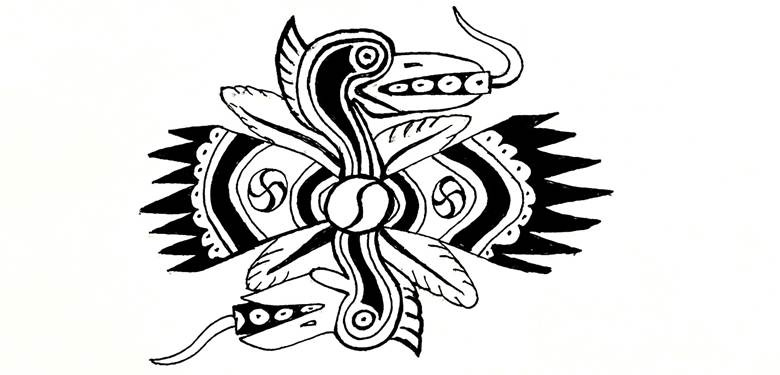
Generations before Columbus, the ivorybill symbolized a supernatural connection to the sky, the world above. Its image was restricted to temples and halls of the powerful. It appeared on religious items at the funerals of the oligarchs.
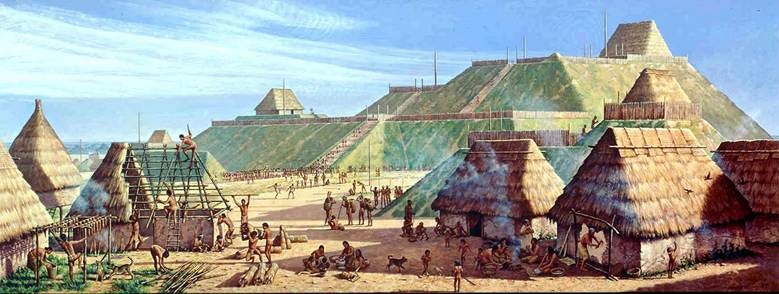
Large city-states – Spiro, Cahokia, and Moundville – were at their peak. In size, they exceeded London or Paris. With enormous temple mounds, wide boulevards, and dwellings laid out in straight lines or perfect curves, they were governed by an elaborate state apparatus. Like the districts in Hunger Games, outlying areas produced corn and nuts and other “tribute goods” – taxes for the Capitol.

The “crested bird” symbol, as archeologists call it, was most common at Moundville, located just inside the southern curl of the Black Belt. That evolved into Choctaw country, the home of my ancestors through my father’s mother’s father’s line. My middle name – Carr – comes from them.
The revolutions
Between 1250 and 1400, social and political revolutions spread across eastern North America. In her recent book, Native Nations, Kathleen DuVal describes “the fall of cities and the rise of a more egalitarian order.” Ruins, artifacts, and burial sites suggest it wasn’t a single event. These revolutions were gradual at times, spanning decades, even a century or more, rippling across the land.
Cities were abandoned, though the people remained. Across the South, the ivorybill icon, once reserved for the ruling class, began to appear outside the walls of the capitols, among the masses, in their homes, on their bowls, at their burial sites – evidence of a more egalitarian society.
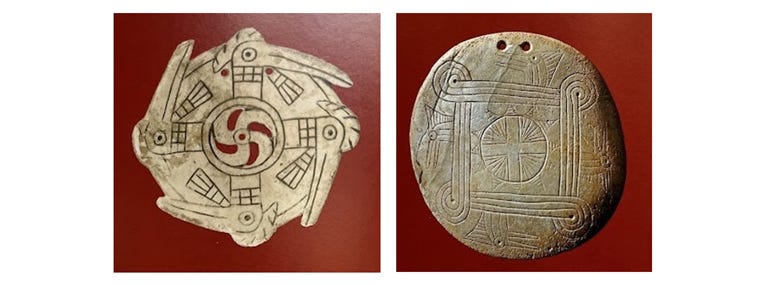
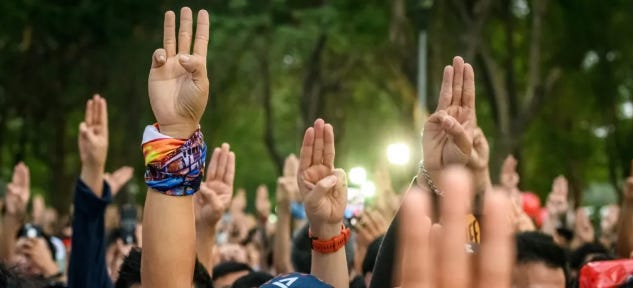
I like to think that the use of the ivorybill emblem spread just before the uprisings, signifying popular unrest and a revolution of ideas. Thus the ivorybill became a rebellious symbol, like a red bandana or the 3-fingered salute.
Across a thousand miles of the Eastern Woodlands, there was a decentralization of power to small farming communities. In the northeast, the Haudenosaunee tore down their walls and formed a democracy with sophisticated checks and balances. Imagine a nation where each ethnic group had veto power. Or where only men could be leaders, but only women could vote and could remove wayward leaders at any time.
Among the Cherokee lines in my family, we have a story about when we rose up – perhaps in the 1500s, we aren’t sure exactly – and deposed our priestly class. They had used their power and privilege to sexually assault young women with impunity. We drove them out. To this day, the Cherokee have no royalty and no priestly class. As with the rest of the descendants of the city-states, we formed communities around our matrilineal clans and kinship groups. We were decentralized, yet we still maintained the One Fire that unified us. And still do today.
The old world
When the Europeans of the Old World arrived in the New World, they encountered the future, but thought it was the past. We had already rejected the oligarchs; they still had them. They labelled us “savages” and called their monarchies “civilization.” Yet so many accounts suggests the opposite was closer to the truth.
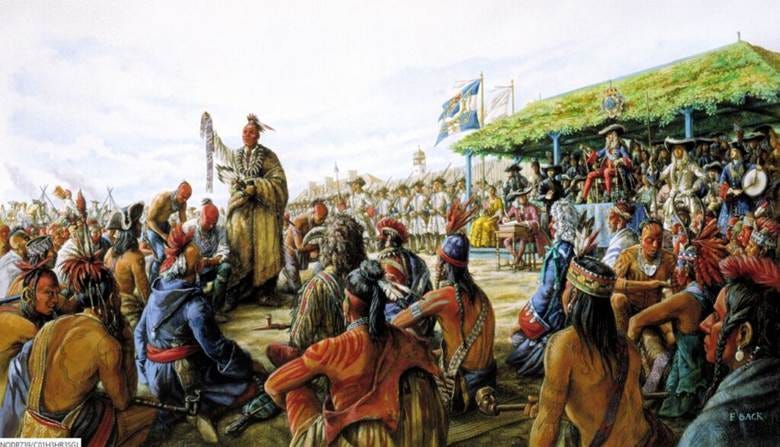
A 1695 conversation between Chingouabe, an Ojibwe leader, and the French governor in Montreal illustrates the different conceptions of social order. Across Europe, tens of thousands were dying in wars between nations. In North America, the French wanted the Ojibwe to join them in a war against the Haudenosaunee. “It is not the same with us as with you,” Chingouabe replied, “When you command, all the French obey you and go to war. But I shall not be heeded and obeyed by my nation in like manner.”
That was because Native peoples enjoyed a remarkable level of freedom and equality, essentially denying leaders the right of violence to maintain order. In many Eastern tribes, a decision to go to war required approval of the Women’s Council. In much of Native America, leadership was only by persuasion, not by force. It was a land of great orators but few police. The greatest leaders, from Tecumseh to Quannah Parker, were known for their excessive generosity to the needy among them. When Native leaders visited London and Paris, they were shocked not just by the poor in the streets, but that no one was helping them.
The authors of The Dawn of Everything posit that much of human history has seen cycles of authoritarian control and decentralized communities. The former are characterized by pyramids, monuments, and enormous walls that are tourist sites today. The latter left fewer landmarks, but their bones show that people were healthier when they weren’t subjugated.
United States of America, 1776-2026
Considering this grand sweep of history, the United States – and much of the modern era – falls at the authoritarian end of the spectrum. There’s a national myth, of course, that the US represents a kind of Ivorybill Revolution of its own, revolting against a king and establishing a democracy with a “bill of rights.” It was a new kind of country, I was taught as a child. Never mind that it was created as a white male ethnostate.
The US’s founding documents are explicit: women could not vote, “merciless Indian savages” had no right to their own lands, and Blacks were enslaved. They cleared my Cherokee and Choctaw ancestors away from Moundville’s fertile soils to create some of the world’s cruelest plantations. And they cleared the forests, too, resulting in the extinction of the Lord God Bird.
I was a poli-sci major in undergrad. I remember a class where the professor was defining terminology. The American Revolution was not a true revolution, she said. It did not meet that standard because it did not really re-order society. It was merely a “colonial revolt.” They changed the flag but, for the subjugated classes, there was no real change.
At the same time, the French, calling for “liberté, égalité, fraternité,” were attempting a real revolution. French conservatives blamed Jesuit missionary journals for spreading seditious ideas. The Jesuit Relations, which were widely read, described conversations like the one above.
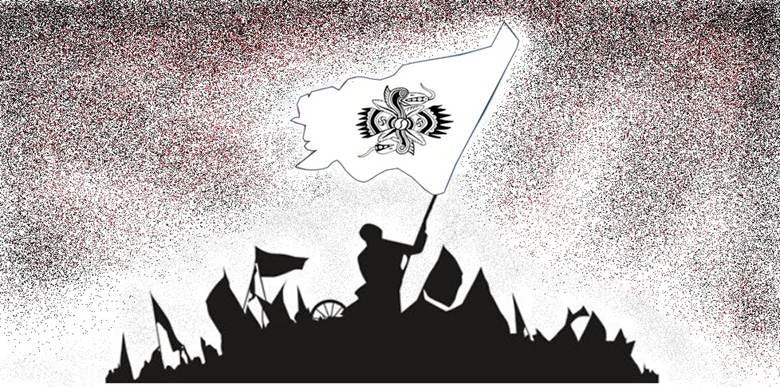
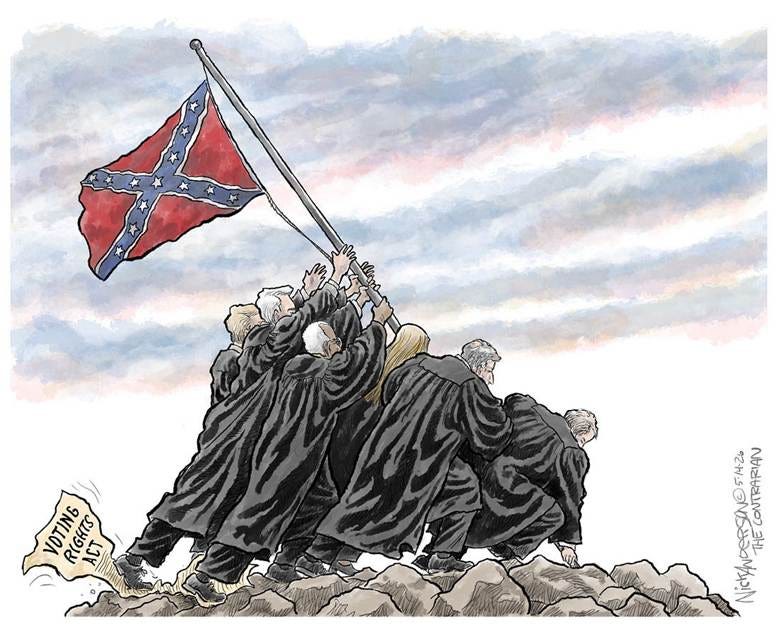
Two-hundred fifty years later, the US stumbles on. It has never offered “freedom and justice for all.” In a democracy, voters chose the leaders. In the US, it is now the reverse. Judges allow rulers to draw lines on maps while the media reports how many seats have been won or lost months before anyone goes to the polls, before the candidates are even selected. The rulers extract taxes straight from paychecks and spend the funds exporting their violence across the world.
A third of the public clings to the US caste system. Another third embraces the principles of the “Ivorybill Revolutions,” trying to hold the US to its supposed ideals, to the notions described in those Jesuit journals. Others, mostly young people, have lost faith. When they think about graduate school now, they look overseas.
I’m with them. It’s been 250 years. The US as we want to know it, as we hope to know it, seems done. Certainly its constitution has proven to be worthless at protecting people from the oligarchs. It needs so many amendments that storming the castle actually seems easier.
In her new book, The Beginning Comes After the End, Rebecca Solnit highlights the cultural revolution since the 1960s – the profound changes in values as reflected in the media, in politics, and in each new generation of young people, as if the ideas of the Ivorybill Revolutions are oozing back out of the swamps. She suggests the current right-wing fascism is like an exploding supernova of a dying star, the final outburst of a declining demographic clinging to power. We can hope so.
Even with a continuing revolution of ideas, our Indigenous history suggests the fall of authoritarian rule can take a while – decades, even centuries. The ivory-billed woodpecker may be gone, but the idea remains that the people deserve basic rights and ultimately have the power. We don’t know what it will look like, but a true Ivorybill Revolution may come eventually. It has before.
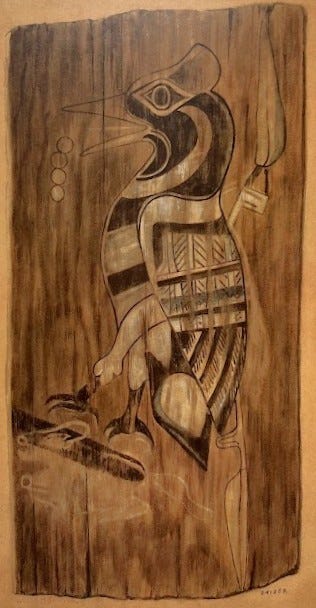
Here's for the Ivory Billed Revolution! ✊️🪶
So glad to see one of your pieces again. This is particularly helpful right now. I just read “We Are the Middle of Forever: Indigenous Voices from Turtle Island on the Changing Earth,” a series of interviews with elders (and youngers) from across the US and Canada. I think one of the editor/interviewers, Dahr Jamail and Stan Rushworth, might live in Port Townsend. The responses seem congruent with what you’re saying about how indigenous people work in community and how women and people of all ages are valued.