Island Night
“Authentic culture” in an age of colonialism

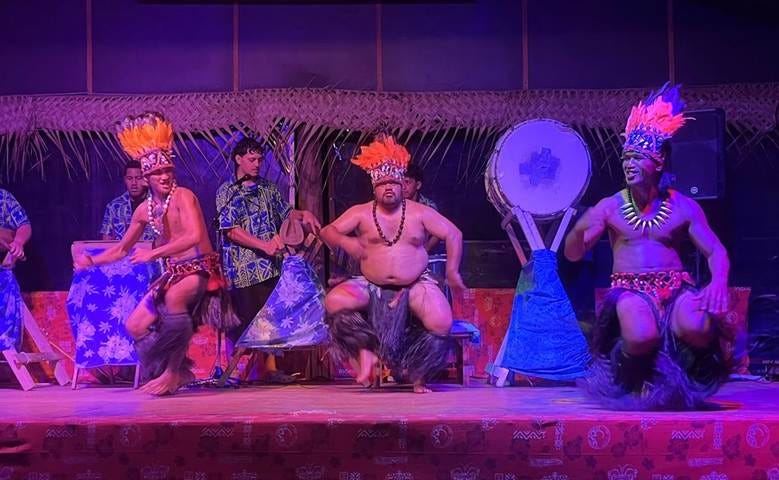
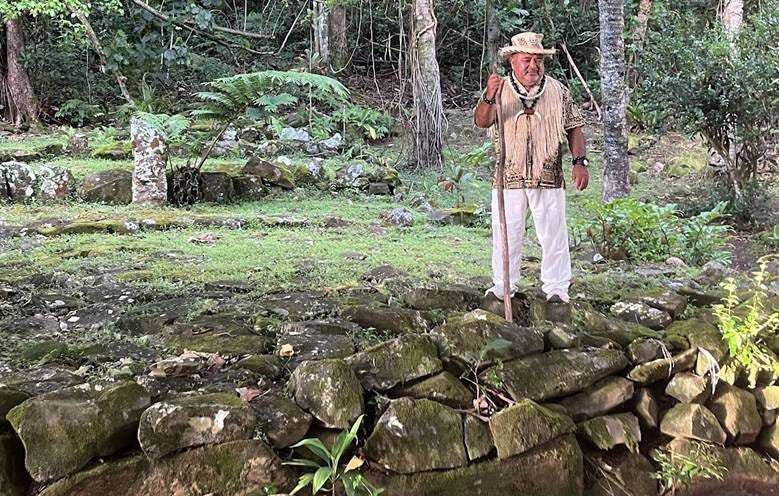
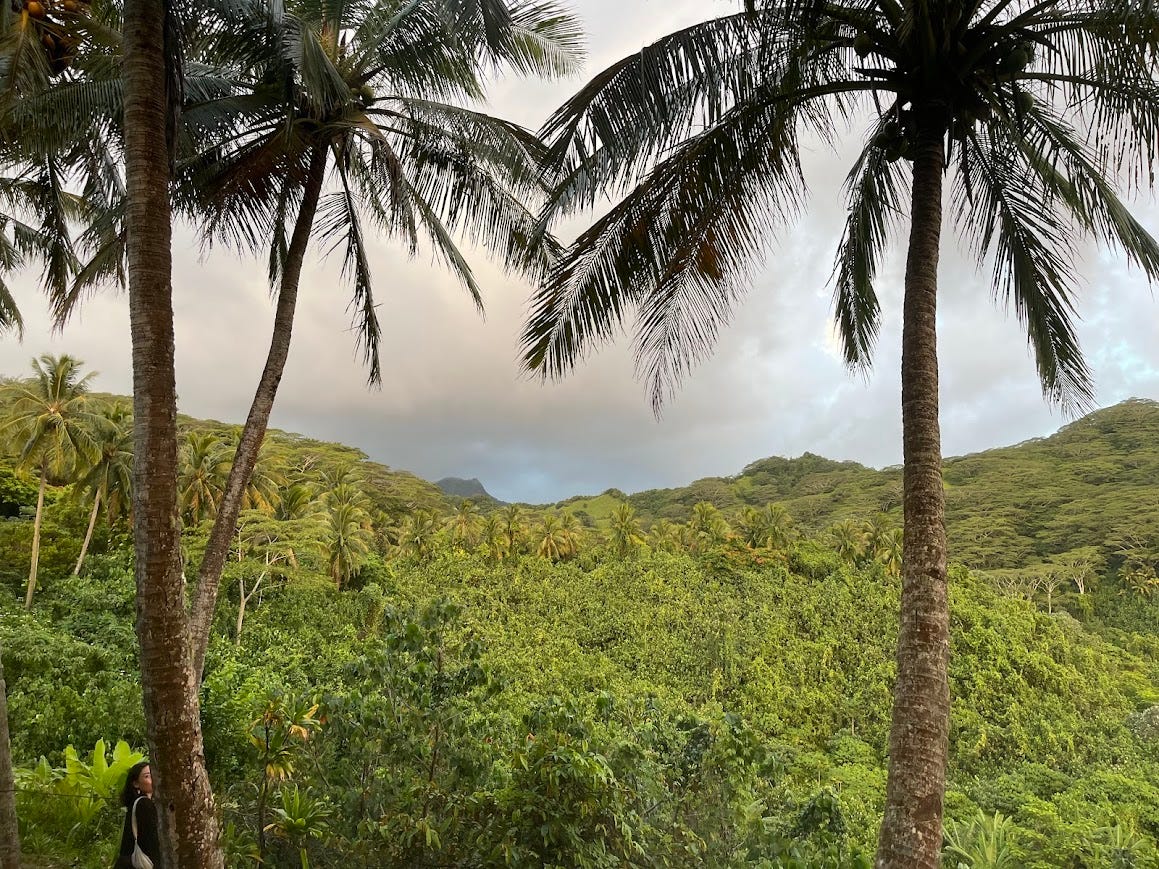
Entitled “Drums of our Forefathers,” this particular cultural dinner and show is considered unique among the other similar programs offered to tourists on Rarotonga. It’s not at a White Lotus hotel along the beachfront. Instead, it mimics a traditional feast in one of the mountain valleys, and is set next to an ancient marae that has only recently been excavated by removing the overgrown vegetation. The brainchild of a local Māori, the dinner and dance program includes a short walk to the ancient stone place of worship, along with a considerable amount of teaching about its history. It also serves to connect local youth to their culture by employing them and raising funds for their continuing efforts. It is billed as an “authentic cultural experience.”
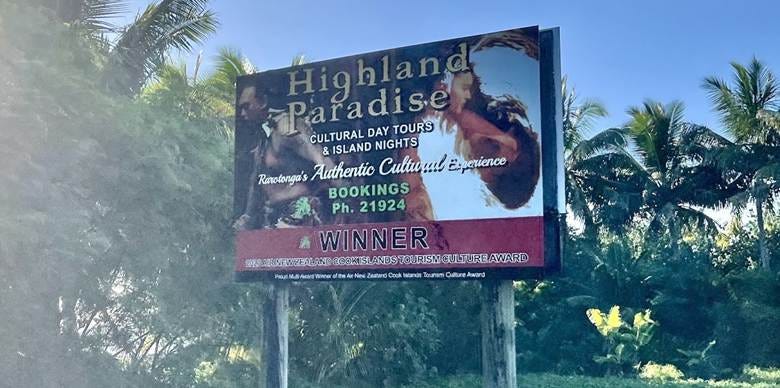
While my family cringed at the idea of attending one of these exploitive performances, as a Native American, I really wanted to go to this one. Locals had previously asked me if I had been and had recommended it specifically as particularly representative of their history. When I responded that I had not been, they voiced disappointment, as if I was just a tourist taking in the scenery while ignoring the people. You should go, they said. This was their tribe’s story, a kind of an indigenous Red Lotus. Though it was pricey, at least the money stayed with them and not with some hotel investment company.
I had to convince my family. They obliged me, and we went.
Soon, we were all cringing.
I’ll start with the positives. The host, who emceed the entire evening like a pastor in a church, told us about Māori history, going back to AD 900 when Kupe conducted the first circumnavigation of Aotearoa (New Zealand). Rarotonga is a kind of mother ship in the South Pacific; it was from here that the Māori migrated to Tahiti and Aotearoa. The host listed his own ancestors back about seven generations to one of the wives of a celebrated leader who converted to Christianity when the missionaries arrived in 1823. He was legit.
Familiar with Cherokee and other Native American presentations, I was expecting next a saga of resilience and determination in the face of oppression and cultural genocide. Despite hardships, the Māori remain, and now they’re telling their story.
But the evening started bending like a hall of mirrors. When he opened with a prayer in the name of Jesus, I wasn’t too surprise. The Cherokees in Oklahoma do this. And, like Oklahoma, the Cooks have been heavily missionized. But then he repeatedly told us that they, the Māori of Rarotonga, were cannibalistic savages constantly at war with each other until the missionaries showed them a better way. Suddenly the Red Lotus was becoming a different kind of White Lotus. I waited and waited, but nuance nor counter-narrative never arrived. Just the straight-up JD Vance narrative – white saviors and Native savages – stuff I would never hear at a Native presentation in the US.
I’m not saying there’s no truth to his story. He did use the term “ritual cannibalism,” though he never explained it. This means that sometimes they ate an enemy as a way to send a message. The Shawnee did this, and probably the Cherokees too. It was rare, but it did happen. And it did happen on Rarotonga in one particularly well-known incident, during the first landing of Europeans on the island in 1814. British Captain Philip Goodenough survived, but his mistress and three of his men paid for this ritual message. But here’s the thing, at least in America, the whites ate the Natives too. When the Donner Party of pioneers were starving in the snow, the only people murdered specifically so that they could be eaten were their two Native guides. There are other examples.
And it’s certainly not the first time I’ve heard Natives echo a self-deprecating pro-missionary party line, how we need the white man to save us from ourselves. In 1807, my three-times great-grandmother, Susannah Taylor, wrote this letter to President Thomas Jefferson:
“Father, your red children are pleased that you continue father of the United States -- you have sent a beloved man the Reved. Gideon Blackburn who has taught us to read the Gospel and gived us to understand the method the white people do their business… We Join in onne request that our father the President will give our beloved man that Necessary aid that will Enable him to cary on our Education. I am a Cherokee girl.”
Susannah was a nine-year-old student at the new mission school. The letter was a class assignment; all the children wrote similar fundraising appeals. Her letter sits in the National Archives today because white people really like shit like this.
But I – and all her ancestors – know full well what happened when Susannah was forty and had twelve kids. The youngest was two. On May 26, 1838, the US Army went door to door, farm to farm, cabin to cabin, like ICE agents, rounding everyone up, taking their livestock and possessions, putting them in stockades, and deporting them to Indian Territory. That’s the main story we tell. I saw it when I was a kid, the Trail of Tears Historic Drama. You can still see it today in Tahlequah.
If there were any similar conflicts between the people of Rarotonga and their colonizers, our host didn’t mention it.
Layered on top of this was a steady stream of misogynist jokes, warning the men in the audience not to give their wives too much power. That Māori leaders were always men - warriors. That women existed to do laundry and to look beautiful.
I could have seen this coming. The Cook Islands still have blue laws, outlawing alcohol sales on Sundays. In fact, most businesses shut down. The churches are packed. The only local radio station plays ukulele renditions of Christian praise songs pretty much all the time, no matter what day it is.
I have no idea if the emcee’s portrayal was representative of most people on the island, or of just some hyper-Christian sect, or if those locals who encouraged me to attend this Island Night were connected to it.
But there are clues that other “authentic” stories exist.
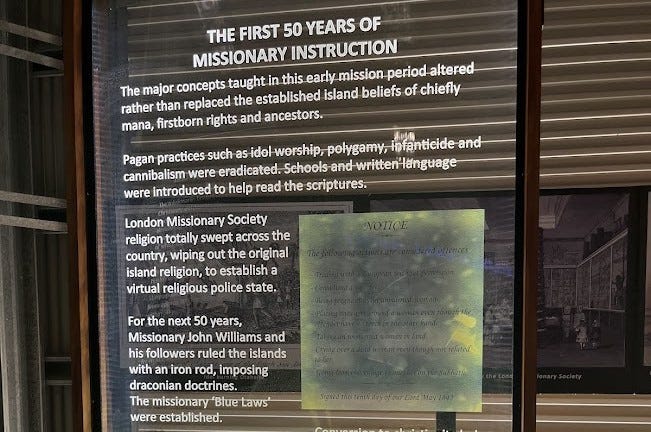
At a Native history museum on the island, one can read that, for two generations, the missionaries created “a virtual religious police state,” meting out harsh punishments for minor infractions. Traditional practices were prohibited, and the roles of women were restricted. At the authentic cultural dinner, we didn’t hear about these things. If there queens here once, as there were in Hawaii, we didn’t hear about them either.
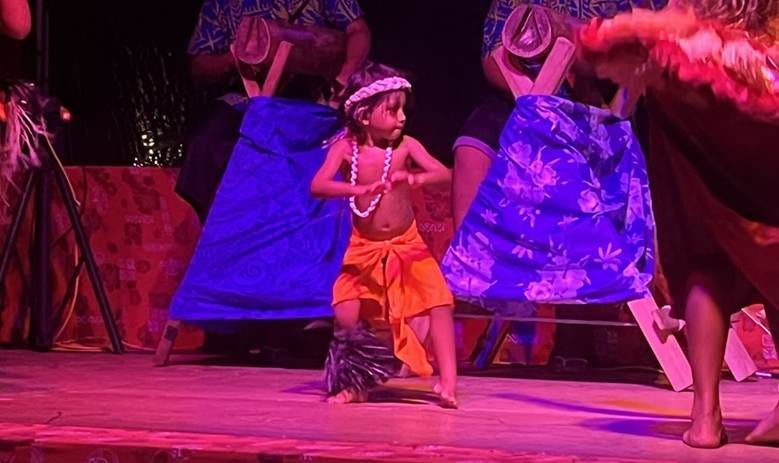
There is also evidence of defiance. It’s a remarkable testament of Indigenous resilience that, even today, the Natives control the island. The land, divided into pie slices from the mountaintop to the beaches, remains communally owned by historic clans. Foreigners cannot own land in the Cook Islands; they can only lease it for a maximum of 65 years. There are no Sheratons or Hiltons. The emcee explained that even he must get the permission of three hundred clan members to develop a plot of land. In the schools, Māori is the language of instruction through third grade, preserving the language. And, as we witnessed at the cultural night, the traditional dances - including the sensual hula complete with coconut shell bras - outlasted the missionaries. Like the Cherokee stomp dances of my ancestors, they were probably preserved by being practiced in secret for generations.
At the end of the evening, the emcee solicited applause by noting that now, thanks to the missionaries, his people had invited us to a feast, but in the past, we would have been the feast. I wondered how the other tourists reacted to his Native savage trope. I turned to TripAdvisor’s 448 reviews for answers. These would have been predominantly white tourists from New Zealand and Australia. Mostly four and five stars – average 4.4 – the reviewers generally lauded the authenticity of the cultural night. They believed every word. Their reviews said things like, “very informative on local history.” I could find no one questioning the presentation as sanitized or white-washed. Many even said they enjoyed his jokes, nearly all of which were patriarchal, at the expense of women.
I skipped down to the one- and two-star ratings. Perhaps these reviewers cast a more critical eye. At the very least, some women would be pretty pissed. But, again, there was nothing of substance. In fact, the reviews were vacuous – just complaints about mosquitos, ants on the table, that the bus was late, or that the cocktails were watered down. I read them all. Not one person commented on or questioned the pro-missionary/Native savage trope. One reviewer specifically didn’t want any history, regardless of content: “We don’t need more history and talking.”
I was left wondering what was more depressing: the fact this was called “authentic,” or that is really was authentic — that this level of colonization, and its normalization as evidenced by the general public’s unquestioning reception of it, is actually an authentic portrayal of reality.
I gave it one star, but I do wonder if, in ten or twenty years, those kids we saw on stage will be telling the story differently.
I've never been to the South Pacific or the Caribbean yet. Your article was very interesting, and I had no idea how the English missionaries were so harsh to the Maoris. These things that the Europeans were doing, it's so different from the way Jesus ( who they claimed to believe in)told his followers to behave. Colonialism and murder, and the other incidents like slavery and genocide weren't allowed. I'll never figure how they'll be able to justify any of the above. I can't look at pictures of the islands in the Caribbean without thinking about the Tainos and the horrors they were subjected to ! All the tribes on those islands……
What a hellish event! When Mark and I were married there 26 years ago, a Maori elder, also a judge, wrote and spoke our ceremony. Not one word was sexist or even pro-Christian (Mark is Jewish but I don’t think they knew that.) Our friends, a couple who organized the wedding, are born Rarotongans, and in all the time we spent together, I never saw one instance where either was ‘superior.’ In fact, the reason I wanted to go to Rarotonga was for the music, because I’d read that the original people were only left alone because most had been killed off by disease. The survivors “converted” to Christianity and their music combines Christian hymns with Maori music and is sung a cappella. They took us to a traditional gathering, and none of it was as you describe here - nor did it cost anything.