Flying into a cuckoo’s nest
The federal government has run asylums before; they used them as prisons

We’ve heard them call us “domestic terrorists” and “anarchists.” They also call us “crazy.” I thought these were just inflammatory epithets, but then I heard Patty O’Keefe, an ICE observer in Minneapolis, discuss her eight hours in captivity.
She had been picked up after following ICE and honking her horn, standing operating procedure across the city now. ICE told her to stop impeding them. She pulled over and parked. ICE pulled over, got out of their vehicle, came over to her Prius, bashed in the windows, threw her phone and car keys in the snow, and hauled her and her partner off to their gulag under the federal building downtown.
There, a young Border Patrol agent interrogated her, asking her why she was opposing ICE. They ended up in a long conversation. “This is why we care,” O’Keefe told him, “We’re concerned about our neighbors. We are scared for our community. That’s why we’re showing up.” Her actions, she told him, came from a “deep place of love and empathy.”
The Border Patrol agent looked at her and said, “Man, I just though all you guys were crazy.”
Watch O’Keefe describe this conversation for KARE 11 News in Minnesota (from the 8:00 mark to about 9:00)
Seemingly, ICE and Border Patrol agents cannot comprehend that the citizens of Minneapolis care about their neighbors. For them, apparently, love and empathy are “crazy.”
Last summer, Trump issued an executive order titled, “Ending Crime and Disorder on America’s Streets.” It ordered the Department of Housing and Urban Development (HUD) to take steps to move the homeless and those with “serious mental illness” into “long-term institutional settings.” He wants to bring back the psychiatric asylums of the past.
At the same time, he characterized immigrants seeking asylum in the US as escaping from asylums in their own countries. He appeared to think that “asylum” has only one definition. He still does. But he doesn’t want asylums for immigrants; he wants them for Americans.
That idea settled to the bottom of the administration’s pile of alarming ideas until yesterday, when, during a rambling speech to mark the one-year anniversary of his term, Trump recalled a memory from his childhood. He looked up at a building looming over his little league field and saw “all this steel, vicious steel, tiny windows, bars all over the place. Nobody was getting out. It’s called the mental institution. That was an insane asylum.” He seemed to relish the idea.
This administration is not shy about signaling. But why would they want to fast track asylums? The same day, ICE leader Bovino acknowledged that the “excellent communications” of the “anarchists” on the streets of Minneapolis were creating a “difficult operating environment” for ICE. Why would he make that information public?
We already know that ICE’s mission creep has included homeless sweeps. Three Native Americans, scooped up from an encampment near Little Earth, a well-known Native community in Minneapolis, remain “missing” somewhere in ICE custody.
The use of “insane asylums” as prisons for the homeless or political dissidents did not begin with the Soviet Union or even with the Nazis. As Rebecca Nagle often points out regarding Trump’s tactics, the US has already done it before, right here. There is a model for this.
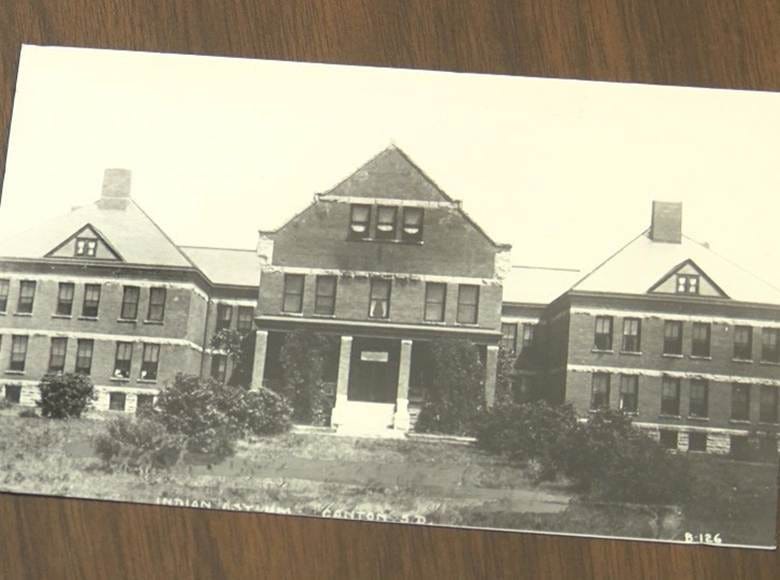
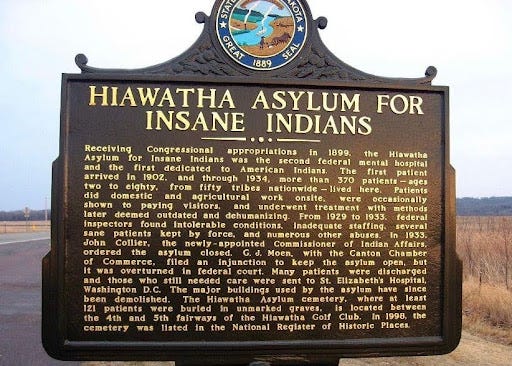
The Hiawatha Asylum for Insane Indians in Canton, South Dakota, opened in 1902. On paper, it was the nation’s second federally operated psychiatric hospital. In practice, it was an extra-judicial prison, meaning it operated essentially in the healthcare realm.
While there were no official intake criteria, patients generally exhibited any of these problems: epilepsy, depression, dementia, drunkenness, thievery, rebelliousness, or leaving their reservation without permission.
Sedatives, housework, and yardwork were the primary treatment methods. Staff were advised to employ kicking, striking, shaking, choking, or throwing patients to the floor as necessary. Its rooms reeked with the smell of urine and shit. Children were straight jacketed to their beds, lying in their excrement. The doors to the rooms were padlocked.
An investigation in 1927 concluded that a large number of the patients showed no signs of mental illness.
In its 31 years in operation, the asylum “treated” over 350 inmates. A third of them died there, an average of one every three months.
A federal investigation in 1932 noted that life at the asylum was like a “living burial.” Nevertheless, the report concluded, it was “a necessary evil.”
Today its cemetery is a golf course. The graves are unmarked. That’s the model.
Folks need not compare our current regime to Nazi Germany etc. We have our own homegrown history of genocide, slavery, concentration camps & lynchings. We’re not imitating the Nazis—they imitated us.
Thanks for this great post what a sad state of affairs